
design.kit
(business model pitch)
Consider the fast food restaurant chain Subway.
It operates on a 'build-your-own-food' model that allows customers to make their own sandwich by picking and mixing ingredients from an assorted, price tagged, diverse array of items that quickly gets made into a sandwich. The ability to mix and match flavors allows a good degree of customization while clear presentation of ingredients and one on one conversations between the customer and server accommodates customer empathy in the sandwich preparation process.
Now consider the online retailer Amazon.
This megalith of an e-commerce company provides an enormous range of different consumer items under its umbrella, through an easy-to-use, efficient, informative, interactive, and transparent website interface. Rigorous use of customer analytics, efficient warehouse management systems, and distribution channels bring different forms of value chain efficiencies as well as an easy shopping experience.
Could the 'build-your-own-food' model be potentially combined with a data analytics-driven shopping website to provide an easy, efficient, informed, and customized purchase experience for a comprehensive prefabricated development, design and construction service?
Could the residential building development, design & construction value chain be reorganized into a comprehensive development experience oriented towards prefabricated construction?
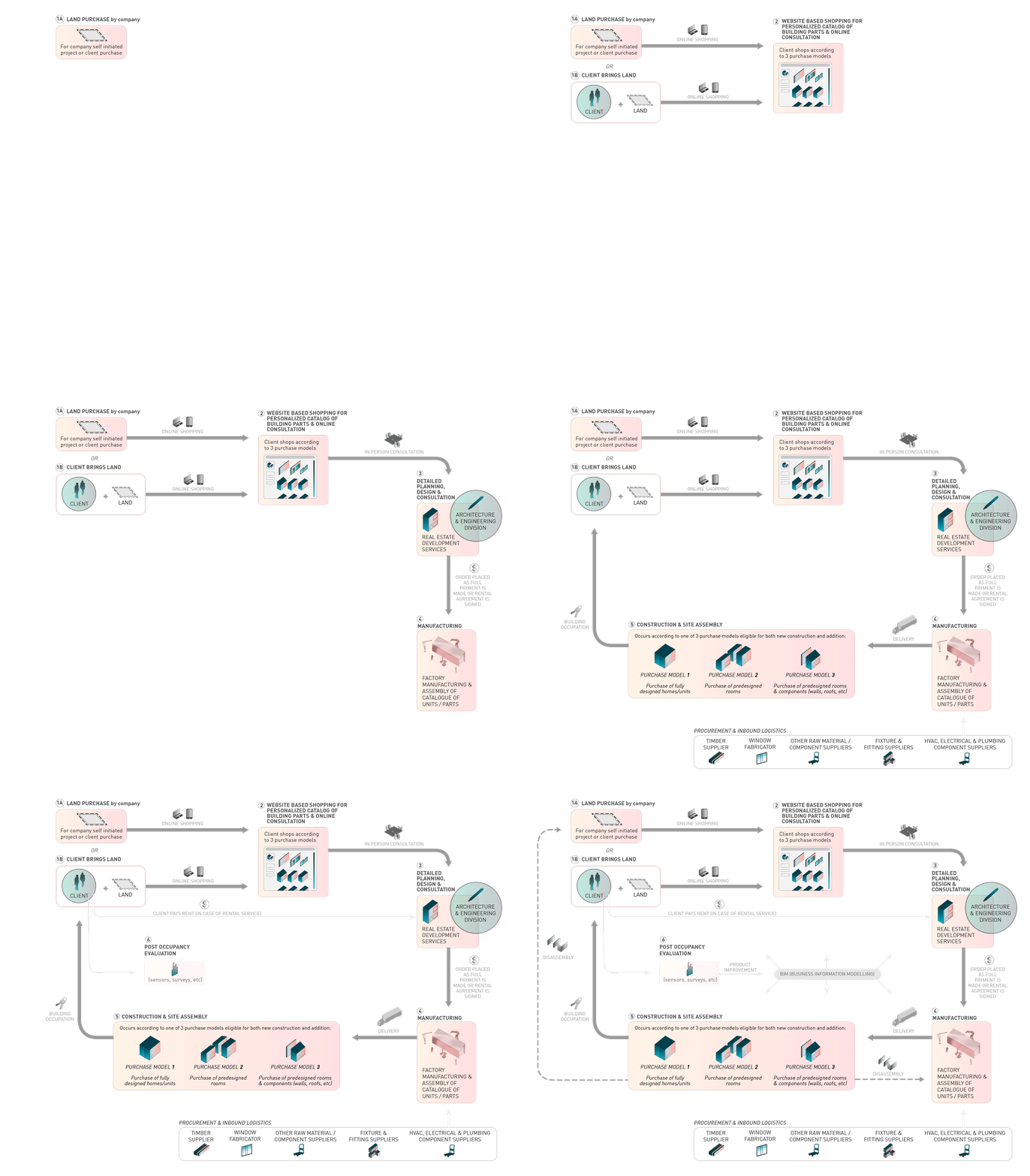
Possible home development value chain, allowing clients to choose from 3 purchase types:
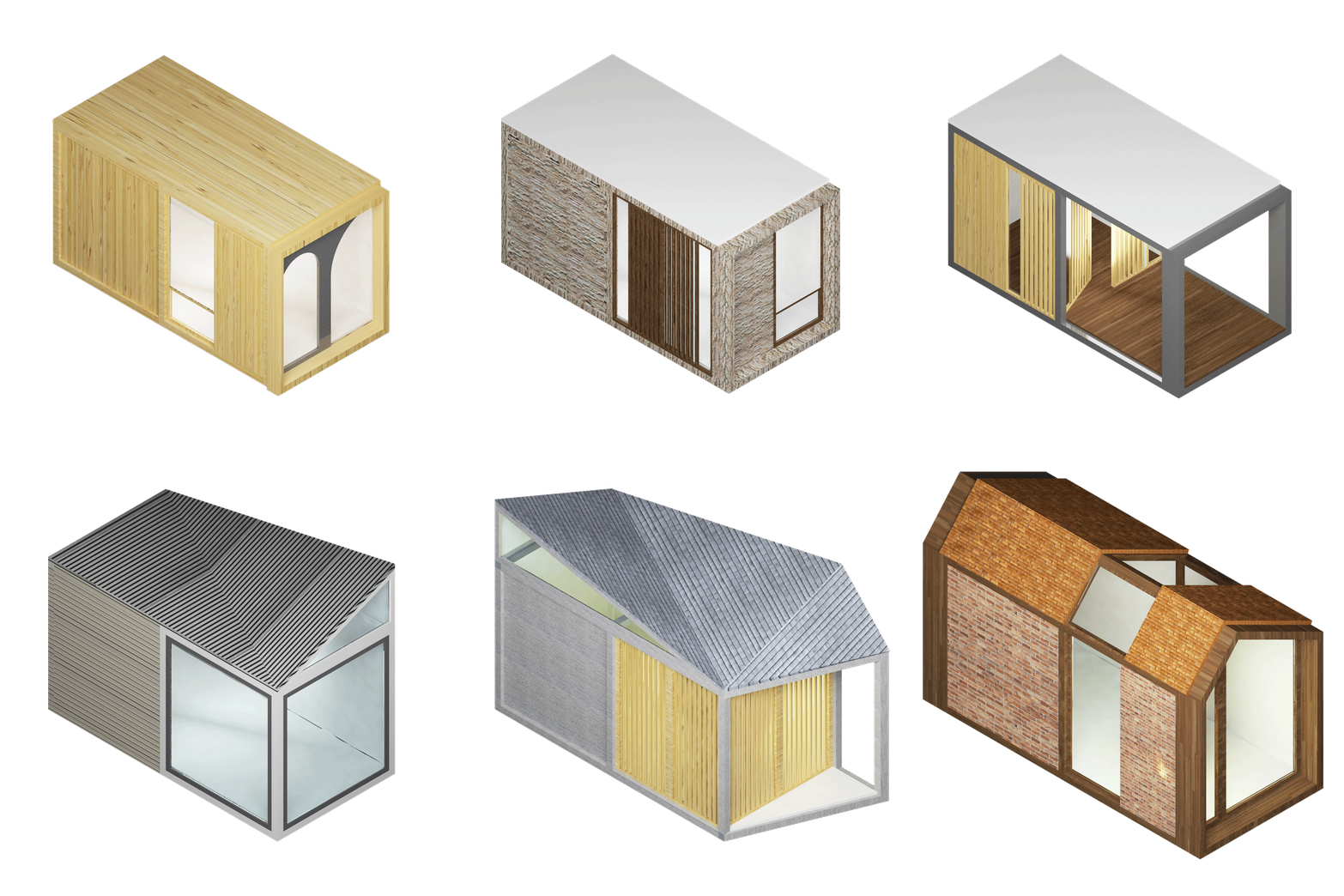
Different design possibilities from different purchase models:
Home office addition from purchase of rooms & unitized components
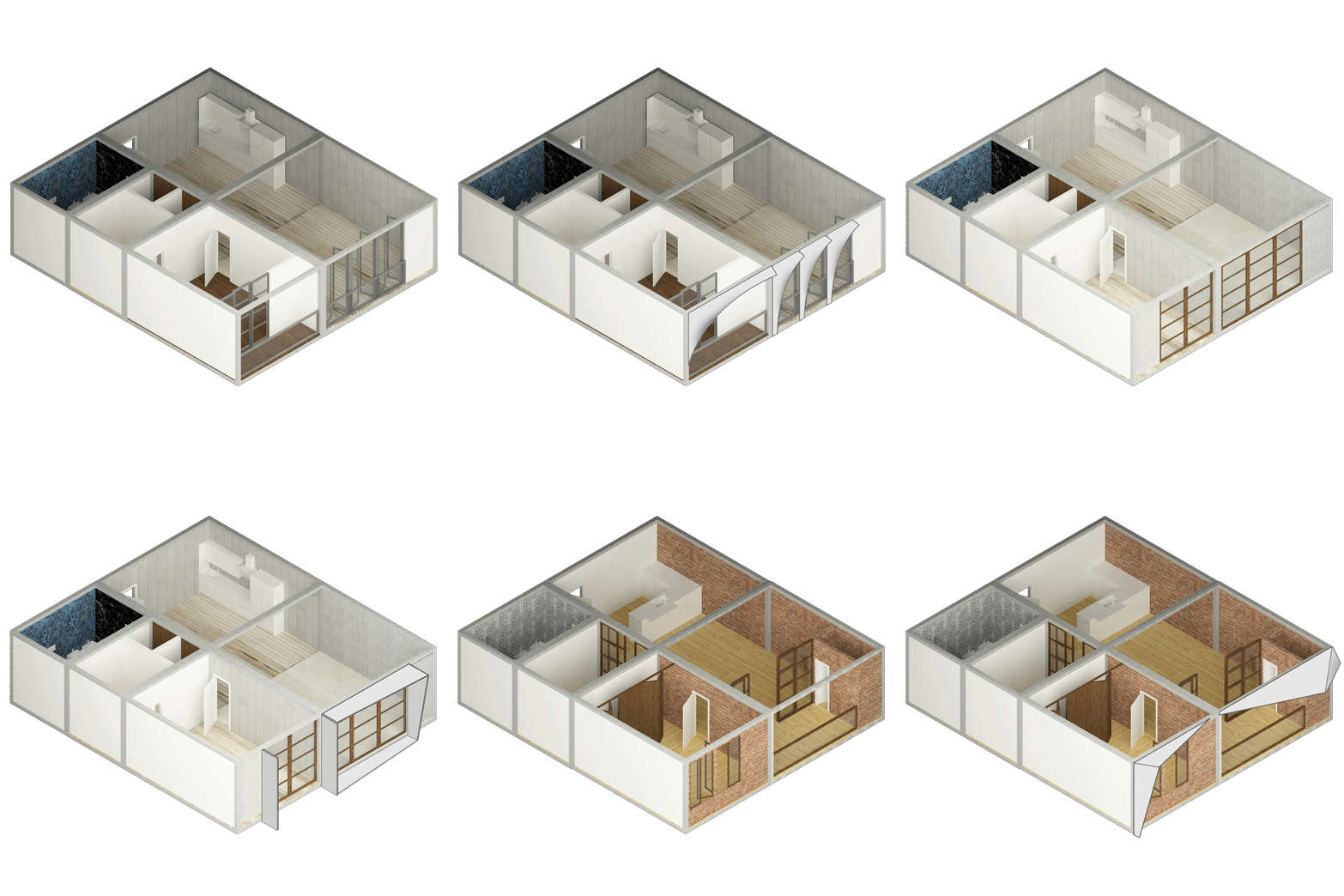
1 bed multifamily unit from purchase of room modules and pods
WHY?
Potential for building industry disruption
Contrasting other major industries, the construction sector has remained mostly static in terms of efficiencies and productivity gains as the way we build has not substantially changed over the past decades. Construction is also one of the least major digitized industries, further contributing to the problem. Across US cities, all these drivers combined with labor shortage and rising cost of building materials ultimately translate into high price tags and rentals for homes, thus creating a housing affordability crisis throughout the country across most income strata. The crisis is also fueled in part by high demand for homes particularly by millennials, baby boomers ageing in place, scarcity of urban land, and an anti-development stance by some citizen groups. On the other hand, there is an urgent need to conserve energy and minimise carbon emissions from buildings and a growing need for spatial environments that improve physiological and mental health of occupants. Industry fragmentation and slow evolution in the architectural business model tied to project delivery means pulls the client and stakeholders into a long and inefficient design and construction process. Industry professionals are also affected by low profit margins.
Major drivers (housing affordability crisis):

Major drivers (others):

But all these challenges in turn also invite innovations in the building development, design and construction sectors.
Beyond modular
prefab
In recent years, a resurged interest in off-site, i.e., prefabricated modular and panelized construction has given rise to innovative vertically integrated and vertically aligned companies operating in different segments of the building development value chain, as a response to many of the aforementioned industry challenges. Such companies recognize the time and cost efficiencies brought about by vertically integrating or aligning development, design, manufacturing, construction, and even property management, as well as construction automation in factories, partially mimicking manufacturing lines. While off-site construction has the potential to cut construction costs by up to 30% and construction schedule by up to 50%, alongside significantly increase schedule reliability and better build quality, it does not intrinsically improve efficiencies in the architectural design process. Vertical integration or alignment, and off-site construction in its current form both inspire but also leave out much room for forming a design service that can be better synchronized with off-site manufacturing systems and capitalize on the greater untapped potentials of off-site construction.
Value proposition for off-site construction
